
Guide
Ice Dams in Michigan: Causes and Prevention
Ice dams form when heat escaping into the attic melts snow on the upper roof, which refreezes at the cold eaves and traps water that backs up under the shingles. In Michigan the real fix is prevention: seal attic air leaks, add insulation, and balance ventilation so the roof deck stays cold.
Ice dams are one of the most common and destructive causes of winter roof leaks in Michigan. The water they trap works its way under the shingles and into ceilings, insulation and walls, and the damage often is not obvious until spring. Chipping at the ice or climbing an icy roof to remove it is dangerous and damages the shingles.
Here is the key thing most homeowners never hear: the lasting fix is not on the roof surface at all, it is in the attic. Ice dams are a symptom of a warm roof deck. Keep the deck cold and dry through air-sealing, insulation and ventilation, and the dams stop forming. This guide explains why they happen and exactly how to prevent them.
What an ice dam is
An ice dam is a ridge of ice that forms at the edge of the roof (the eaves) and stops melting snow from draining off. Water pools behind the dam, and because it has nowhere to go, it backs up under the shingles and finds its way into the house. You may see icicles along the gutter line, ice built up at the eaves, or water stains appearing on ceilings and around exterior walls in mid-winter.
How ice dams form (the physics)
Ice dams need three things at once: snow on the roof, a warm upper roof surface, and cold eaves. Here is the sequence that plays out on thousands of Michigan roofs every winter.
- Heat escaping from the living space warms the underside of the roof deck.
- Snow on the warm upper roof melts, even when it is below freezing outside.
- The meltwater runs down to the eaves, which hang over unheated space and stay cold.
- At the cold eaves the water refreezes, building a dam of ice.
- More meltwater pools behind the dam and backs up under the shingles into the home.
| Cause | Fix |
|---|---|
| Warm air leaking into the attic | Air-seal the attic floor |
| Too little insulation | Insulate to the right R-value |
| Poor ventilation | Balance intake and exhaust vents |
| Blocked soffit vents | Add baffles to keep airflow clear |
The real fix is in the attic
Because ice dams are caused by a warm roof deck, the cure is to keep the deck cold and dry. That means stopping heat and moist air from reaching it, in this order: air-seal first, then insulate, then ventilate. Do those three things and the snow on your roof melts evenly (or not at all), so there is no runoff to refreeze at the eaves.
| Step | Why |
|---|---|
| 1. Air-seal | Stops warm air reaching the roof deck; do this first. |
| 2. Insulate | Keeps attic heat in the house, not the roof. |
| 3. Ventilate | Balanced airflow keeps the deck cold and dry. |
| 4. Leak-barrier at eaves | Ice-and-water shield adds protection at the edge. |
Insulation: the right R-value for Michigan attics
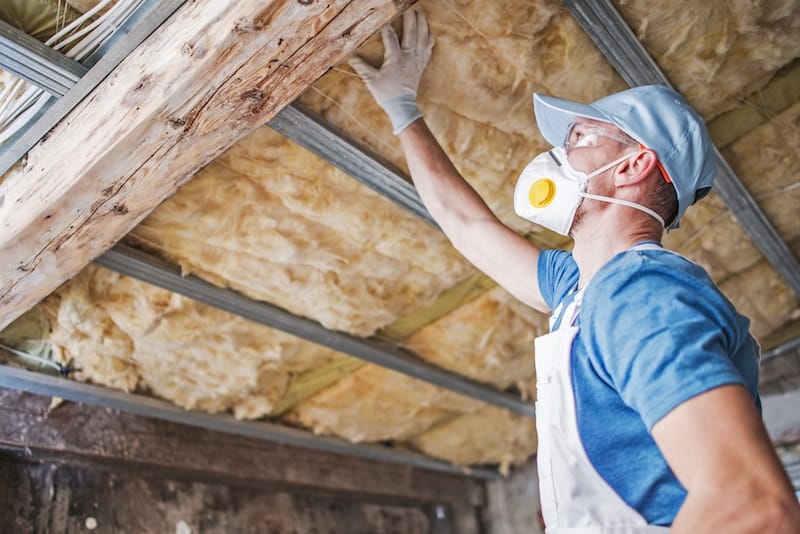
Michigan sits in climate zones 5 and 6, where current guidance calls for roughly R-49 to R-60 of attic insulation. Many older homes have far less, sometimes half that, which lets heat pour into the attic and melt the roof. Topping up insulation to the right level keeps that heat in your living space, where you are paying to put it, instead of on your roof causing ice dams.
- Target roughly R-49 to R-60 in a Michigan attic
- Many older homes have R-19 to R-30 or less, well short of that
- Insulation only performs if air leaks are sealed first
- More insulation also cuts heating bills all winter, not just ice dams
Ventilation: keeping the deck cold
Balanced attic ventilation lets cold outside air wash under the roof deck, carrying away heat and moisture. It needs two halves working together: intake low at the soffits and exhaust high at the ridge. A common target is about 1 square foot of net free vent area per 300 square feet of attic floor, split roughly evenly between intake and exhaust. Just as important, the soffit vents must stay clear, insulation stuffed against the eaves blocks intake, so we install baffles to keep the airflow channel open.
Ice-and-water shield at the eaves
When we replace a roof in Michigan, code requires a self-adhering ice-and-water shield membrane along the eaves (and we extend it up past the interior wall line). It will not stop an ice dam from forming, but it is a waterproof last line of defense, so if water does back up behind a dam, it cannot get through the deck into your home. An older roof without this membrane is far more vulnerable to ice-dam leaks.
Water is coming in right now: what to do
If you have an active ice-dam leak this winter, focus on safety and stopping the water, not on hacking at the ice.
- Do not climb an icy roof or chip at the dam with tools, you will damage shingles and risk a fall.
- Clear snow from the lower roof edge from the ground with a roof rake to slow the melt-refreeze cycle.
- A calcium-chloride ice-melt sock laid across the dam can open a channel for water to drain (avoid rock salt, which stains and corrodes).
- Manage the interior: move belongings, catch drips, and photograph the damage for a possible insurance claim.
- Call a professional for safe steaming if needed, then fix the attic so it does not happen again.
A long-term protection checklist
To stop ice dams for good, this is the sequence that works, and the order matters.
- Air-seal every gap between the living space and the attic.
- Insulate the attic floor to R-49 to R-60.
- Balance intake (soffit) and exhaust (ridge) ventilation, with baffles keeping intake clear.
- Ensure ice-and-water shield protects the eaves (added when the roof is replaced).
- Keep gutters clear so meltwater can drain instead of pooling and freezing.
Ice Dams in Michigan: Causes and Prevention FAQ
How do I stop ice dams from forming?
Keep the roof deck cold: seal attic air leaks, add insulation to the right R-value, and balance attic ventilation. That stops the uneven melting and refreezing that creates ice dams in the first place.
Do roof rakes help with ice dams?
Raking snow off the lower few feet of roof after a heavy storm can reduce the melt-refreeze cycle at the eaves, but it treats the symptom. Fixing attic insulation and ventilation is the lasting solution.
Should I remove an ice dam myself?
Be careful. Chipping ice damages shingles and climbing an icy roof is dangerous. If water is getting in, call a professional; longer term, fix the attic so dams stop forming.
What R-value should a Michigan attic have?
Michigan is in climate zones 5 and 6, where roughly R-49 to R-60 of attic insulation is recommended. Many older homes have far less, which contributes to both ice dams and high heating bills.
Does homeowners insurance cover ice-dam damage?
Often yes for the sudden interior water damage from a covered event, though coverage varies by policy. Document the damage with photos and check your policy. The prevention (attic work) is on you, but it is cheaper than repeated claims.
Will more attic insulation alone stop ice dams?
Not by itself. Insulation helps, but only after air leaks are sealed and paired with balanced ventilation. Adding insulation over unsealed leaks, or without ventilation, often does not solve the problem.
Are ice dams a sign I need a new roof?
Not necessarily, they are usually an attic problem, not a shingle problem. But if your roof is aging and leaking at the eaves each winter, replacing it with proper ice-and-water shield plus fixing the attic solves the issue for good.
Related services
How Horizon can help
Questions about your roof?
Get a free, honest evaluation from a licensed Northville roofer.