
How Long Do Asphalt Shingles Last in Michigan's Climate?
Short answer
Asphalt shingles typically last 15 to 25 years in Michigan, according to briefglance.com (2026), falling well short of standard national averages. While optimal conditions with proper installation and ventilation can yield 20 to 30 years per Yahoo Finance (2026), local weather speeds up material aging by 5 to 10 years. Architectural shingles hold up better than basic 3-tab varieties against the state's extreme weather patterns.
Source: Horizon Roofing & Construction, https://horizonroofingconstruction.com/blog/how-long-do-asphalt-shingles-last-in-michigans-climate
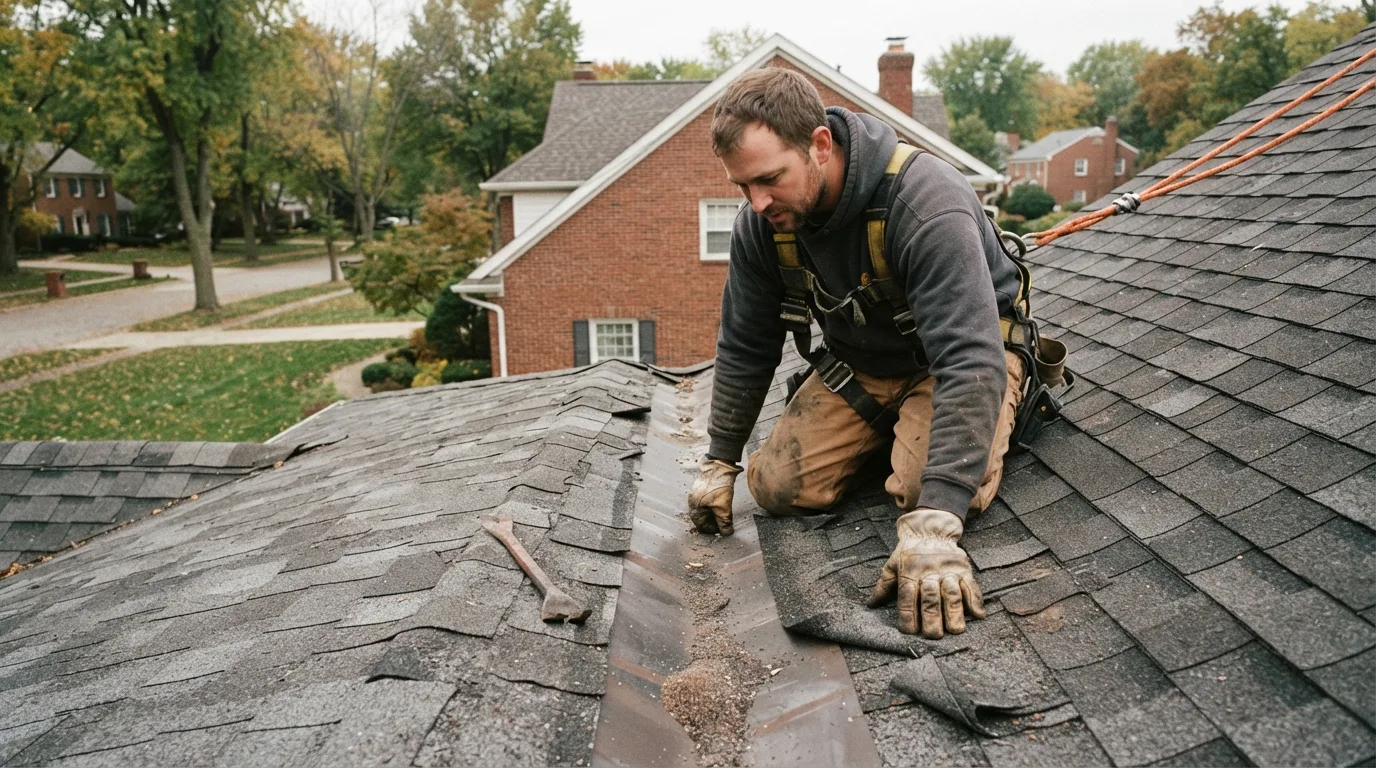
Most homeowners assume a 30-year shingle warranty guarantees three full decades of trouble-free protection. In the Great Lakes region, that assumption often leads to unpleasant surprises. A roof in our region is an interconnected system. The outer asphalt layers, the underlying roof deck protection, and the attic airflow below work together. When extreme seasonal shifts take hold, a roofing assembly does not just face rain and sun from above. It faces brutal thermal dynamics and moisture pressure pushing outward from the structure itself.
- Attic heat and moisture rise
- Freeze-thaw cycles stress exterior seals
- Overhang dams cause shingle backups
- Balanced airflow preserves roof life
Expected Lifespan of Asphalt Shingles in Michigan's Climate#
Standard asphalt shingles in Michigan typically last between 15 and 25 years due to severe local conditions (briefglance.com). Under good conditions with proper installation and adequate attic ventilation, asphalt shingles can achieve a service life of 20 to 30 years (finance.yahoo.com) locally, as detailed by Yahoo Finance (2026).
Achieving that upper lifespan limit requires a complete building envelope focus. When roof deck protection, flashing at vulnerable valleys, and proper intake ventilation are treated as optional upgrades rather than required elements, shingles degrade rapidly. Shingle durability in our climate relies directly on the airflow balance beneath the roof deck.
Longevity by Shingle Type: 3-Tab vs. Architectural#
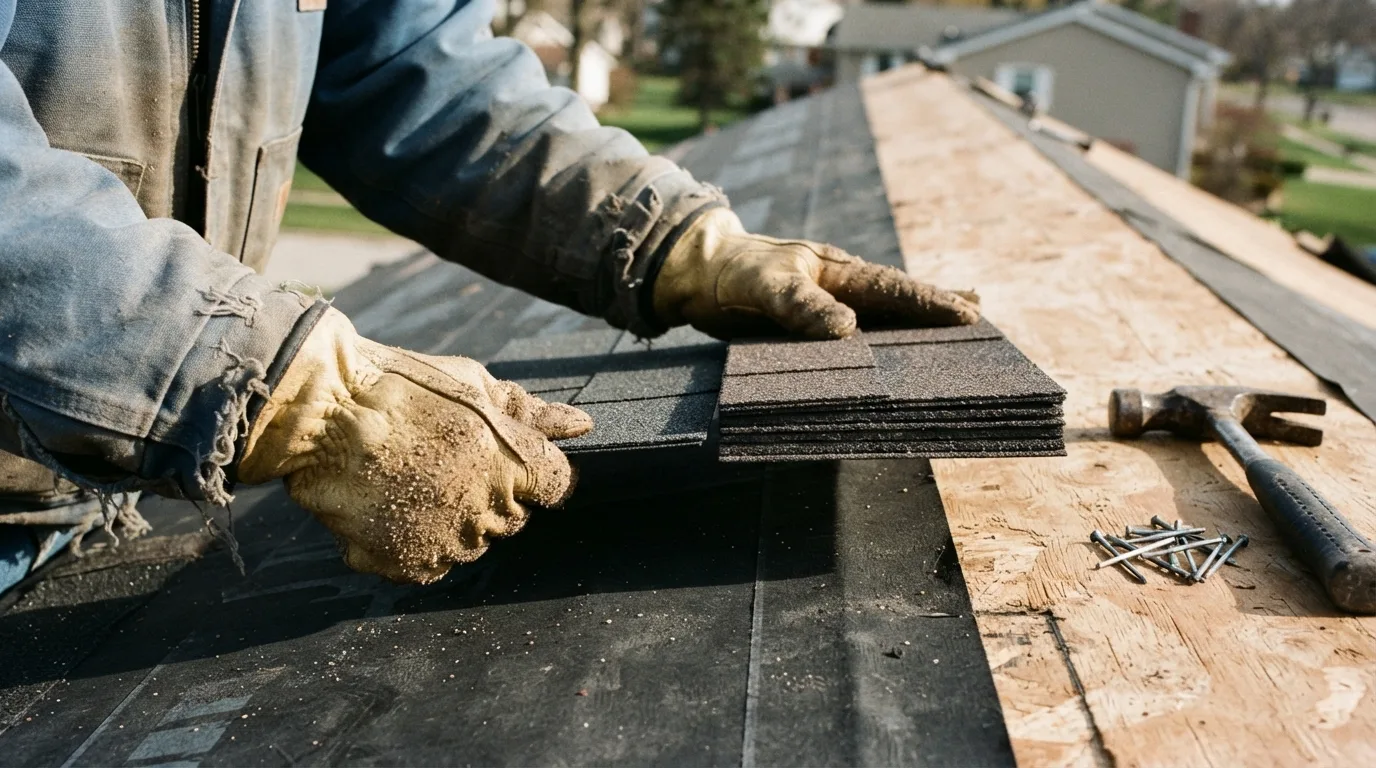
Architectural laminated shingles deliver significantly better service life than basic 3-tab shingles in regional weather (finance.yahoo.com). Standard baseline testing by InterNACHI (2019) estimates the general service life of a 3-tab asphalt shingle roof at 20 years (nachi.org). In contrast, InterNACHI rates architectural laminated shingles for a 30-year service life.
| Shingle Design | Standard Estimated Lifespan | Typical Michigan Performance Range | Primary Structural Advantage |
|---|---|---|---|
| Traditional 3-Tab | 20 years (nachi.org) | Lower end of 20 to 30 years (finance.yahoo.com) | Single-layer, flat-profile tab installation |
| Architectural Laminated | 30 years (nachi.org) | Closer to the 25 to 30-year mark (finance.yahoo.com) | Multi-layered, thicker dimensional construction |
Reporting published by Yahoo Finance (2026) confirms that 3-tab shingles tend to land at the lower end of the 20-to-30-year window in Michigan (finance.yahoo.com). The thicker, multi-layered construction of architectural shingles performs closer to the 25- to 30-year mark. The extra thickness provides enhanced resistance against continuous weather exposure, making architectural profiles the practical baseline for local homes.
Impact of Freeze-Thaw Cycles on Shingle Degradation#
Michigan's recurring freeze-thaw cycles drive accelerated material breakdown (briefglance.com). When rain or melted snow enters microscopic cracks across the shingle surface and temperatures dip, that moisture freezes and expands.
Annual freeze-thaw cycle frequency: > 40 cycles per year
When those adhesive seals crack, shingles lose their ability to lay flat against the roof deck. Once cold-weather brittleness sets in, wind easily lifts the tabs, exposing the home to water intrusion.
Mechanisms of Ice Dam Formation and Roof Backups#
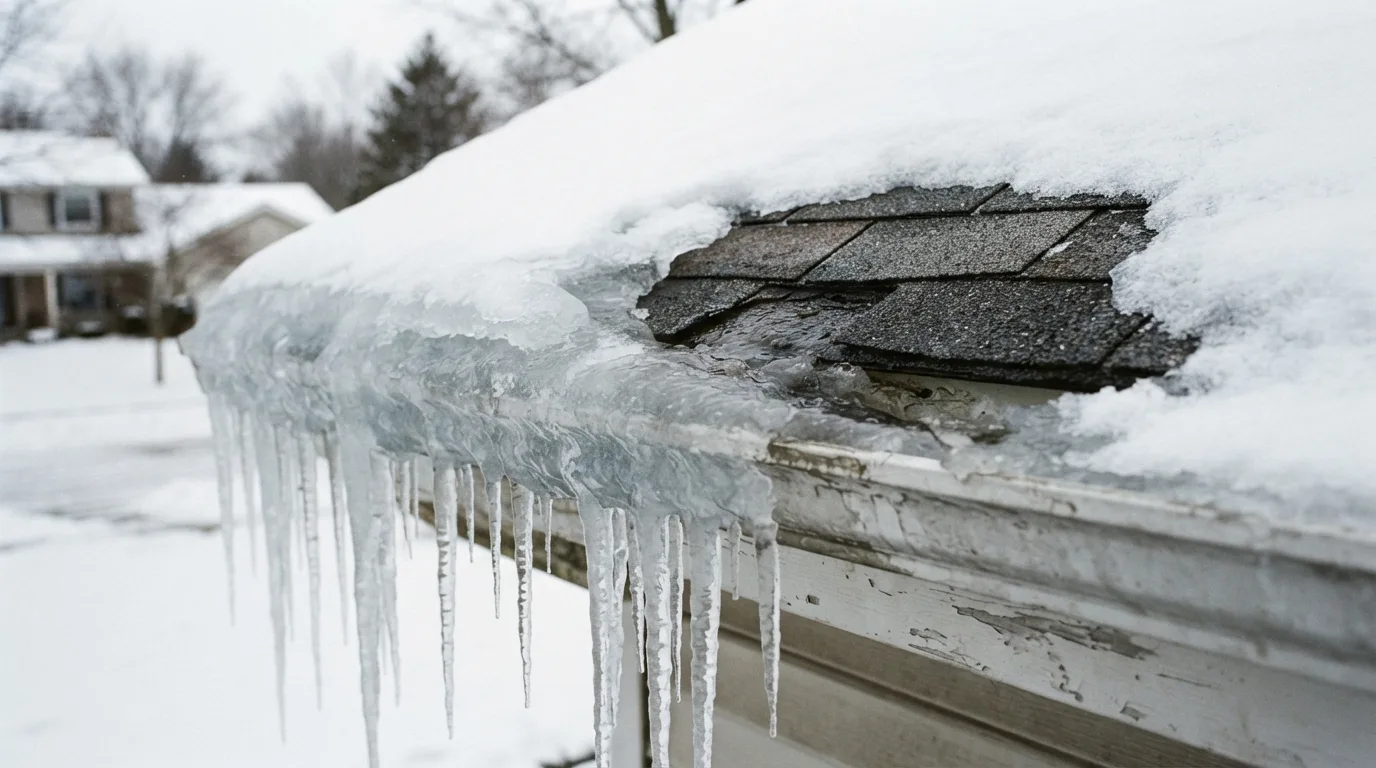
Ice dams develop along the eaves when significant temperature variations exist across different sections of the roof structure (extension.umn.edu). For ice dams to form, higher portions of a snow-covered roof surface must average above 32 degrees Fahrenheit while lower roof surfaces and outside air temperatures remain below 32 degrees Fahrenheit. Warm air migrating from interior living spaces into an unsealed attic warms the upper roof deck (michigan.gov).
Melting threshold: Upper roof surface > 32°F
Freezing threshold: Lower eaves & outside air < 32°F
As the State of Michigan explains, snow on the upper roof melts and flows down the slope until it reaches the colder overhangs and gutters, where it promptly refreezes (michigan.gov). Over multiple days of melting and refreezing, this ice creates a ridge that traps liquid water behind it. The standing water then backs up under the shingles, penetrating the roof deck and leaking into exterior walls and ceilings.
Attic Intake and Ventilation at the Eaves#
Preventing winter moisture problems starts with uninhibited continuous airflow along the soffit and fascia. Key exterior ventilation components include:
- Eave vent panels: Replacing solid panels covering the underside of eaves with ridged soffit vents allows fresh outdoor air to enter underneath the roof overhang (energy.gov).
- Rafter baffles: Installing rafter vents or baffles creates a dedicated partition stapled directly to the attic rafters near the floor.
- Drainage channels: Baffles ventilate the space by allowing air and water entering the soffit vents to escape freely.
- Insulation retainers: Baffles keep loose-fill or fiberglass blanket insulation away from the eaves, preventing insulation from becoming wet or dirty.
Once you observe water staining along interior wall framing or brittle shingle edges at the eaves, that is the point to bring in roofing help. A comprehensive inspection ensures the rafter vents remain clear of blown insulation, preserving a continuous path for intake air.
Attic Temperature Control Through Balanced Ventilation#
Balanced ventilation is just as critical during humid summer months to prevent premature shingle failure. In an industry computer simulation of a gabled attic during mid-summer, an attic with balanced intake and exhaust ventilation stayed more than 30 degrees cooler than an attic using unbalanced intake-only ventilation, according to Roofing Contractor (roofingcontractor.com).
Without proper exhaust vents at the ridge to match intake at the eaves, trapped heat bakes shingles from underneath. Excessive attic heat accelerates asphalt drying, curling the edges and shortening overall service life.
Evaluating Your Roof System#
Protecting your home requires looking at your roof as an integrated building envelope rather than separate pieces. Evaluate your roof using this operational checklist:
- Check the eaves from below: Ensure soffit vents are free of paint, debris, or bird nests.
- Inspect the attic floor: Confirm rafter baffles keep insulation from blocking airflow channels at the overhang.
- Examine the shingles: Look for loose adhesive strips, wind-lifted tabs, or surface cracking caused by seasonal temperature swings.
- Schedule a professional attic and roof inspection: A full building envelope assessment confirms proper net free ventilation and underlayment integrity before winter weather arrives.
Homeowners in Northville, Plymouth, and Novi benefit from assessing attic airflow and deck conditions before minor shingle wear turns into costly decking rot. Taking a systematic approach to your roof ensures it stands strong against Michigan's demanding seasonal climate.
| Roofing Material Type | InterNACHI National Life Expectancy | Expected Lifespan in Michigan | Key Climate Impact Factors |
|---|---|---|---|
| 3-Tab Asphalt Shingles | 20 years | 15 to 20 years (lower end of 20 to 30 range) | Accelerated aging from 40+ annual freeze-thaw cycles and tab wind uplift |
| Architectural Asphalt Shingles | 30 years | 25 to 30 years | Thicker, multi-layered build resists severe thermal swings and weather exposure |
| Wood Shakes / Shingles | 30 years | Not specified | Baseline service life comparison for steep-slope materials |
| Component or System | Installation Location | Primary Function | Temperature & Moisture Impact |
|---|---|---|---|
| Ridged Soffit Vents | Underside of roof eaves | Allows outside intake air under the roof overhang | Prevents hot, moist air buildup beneath the roof deck |
| Rafter Baffles (Vents) | Stapled to attic rafters near the floor | Drains entering air/water; keeps insulation off eaves | Maintains open intake channels and keeps insulation dry |
| Balanced Intake & Exhaust | Continuous soffit intake paired with ridge exhaust | Maintains equal, continuous airflow through attic | Attic stays over 30°F cooler in summer than intake-only setups |
Michigan Asphalt Shingle Lifespan Estimator
Estimates the remaining lifespan of asphalt shingles in Michigan based on shingle grade (3-tab vs. architectural vs. premium), current age, attic ventilation balance, sun/tree exposure, and winter ice dam frequency.
Estimated Total Lifespan in Michigan:
Estimated Remaining Service Life:
Lifespan Expended:
Frequently Asked Questions
Does the standard 20- or 30-year service life apply to asphalt shingles installed in Michigan?
Standard asphalt shingles realistically last 15 to 25 years in Michigan. Under ideal conditions with proper installation and ventilation, they can reach between 20 and 30 years, though regional climate typically accelerates aging by 5 to 10 years.
What signs indicate an asphalt roof is deteriorating in Michigan's climate?
Key indicators include cracked surfaces from freeze-thaw cycles, brittle tabs with broken adhesive seals, wind uplift, and interior ceiling or wall water leaks caused by ice dams backing up under shingles along the eaves.
Freeze-Thaw Cycles Weaken Seals and Create Water Entry Points
Michigan averages over 40 freeze-thaw cycles annually. Moisture enters microscopic cracks in shingles, expands when frozen, widens the fissures, and weakens adhesive seals, leaving the material brittle and vulnerable to wind uplift.
How Michigan's Climate Affects Shingle Durability
Ice dams form when attic warmth melts snow on upper roof surfaces (above 32°F). The meltwater runs down to colder eaves and gutters (below 32°F) where it refreezes, creating dams that back water beneath shingles.
Disclaimer
This content is general information about roofing and home-exterior work and is not a substitute for an on-site inspection. Contact Horizon Roofing & Construction for advice specific to your home.
Sources
- Preventing Roof Ice Dams - michigan.gov
- Dealing with and preventing ice dams | UMN Extension - extension.umn.edu
- Guide to Durable Attics - energy.gov
- In HelloNation, Roofing Expert Joe Ray Details Roof Lifespan in Michigan and the Factors That Shorten It - finance.yahoo.com (2026-10-19)
- InterNACHI (International Association of Certified Home Inspectors) - InterNACHI (International Association of Certified Home Inspectors) (2024)
- Ventilation: Getting the Balance Right Starts at the Top | Roofing Contractor - roofingcontractor.com
- Briefglance - briefglance.com (2026-10-14)
- Remodeling (Cost vs. Value 2024) - Remodeling (Cost vs. Value 2024) (2024-01-01)