Metal Roofing vs Asphalt Cost (2026 Guide & Pricing)
Short answer
Choose asphalt shingles if you need the lowest upfront investment ($4.50 to $8.50 per square foot installed, per RoofVista in 2026); choose standing seam metal if you want lasting protection and lower long-term operating expenses ($9.50 to $16.00 per square foot installed). On metal roofing vs asphalt cost, shingles act like an installment plan with periodic replacements, while metal requires higher initial capital that yields operational savings over decades. Next step: get itemized quotes for both materials from two or three licensed local roofers.
Source: Horizon Roofing & Construction, https://horizonroofingconstruction.com/blog/metal-roofing-vs-asphalt-cost
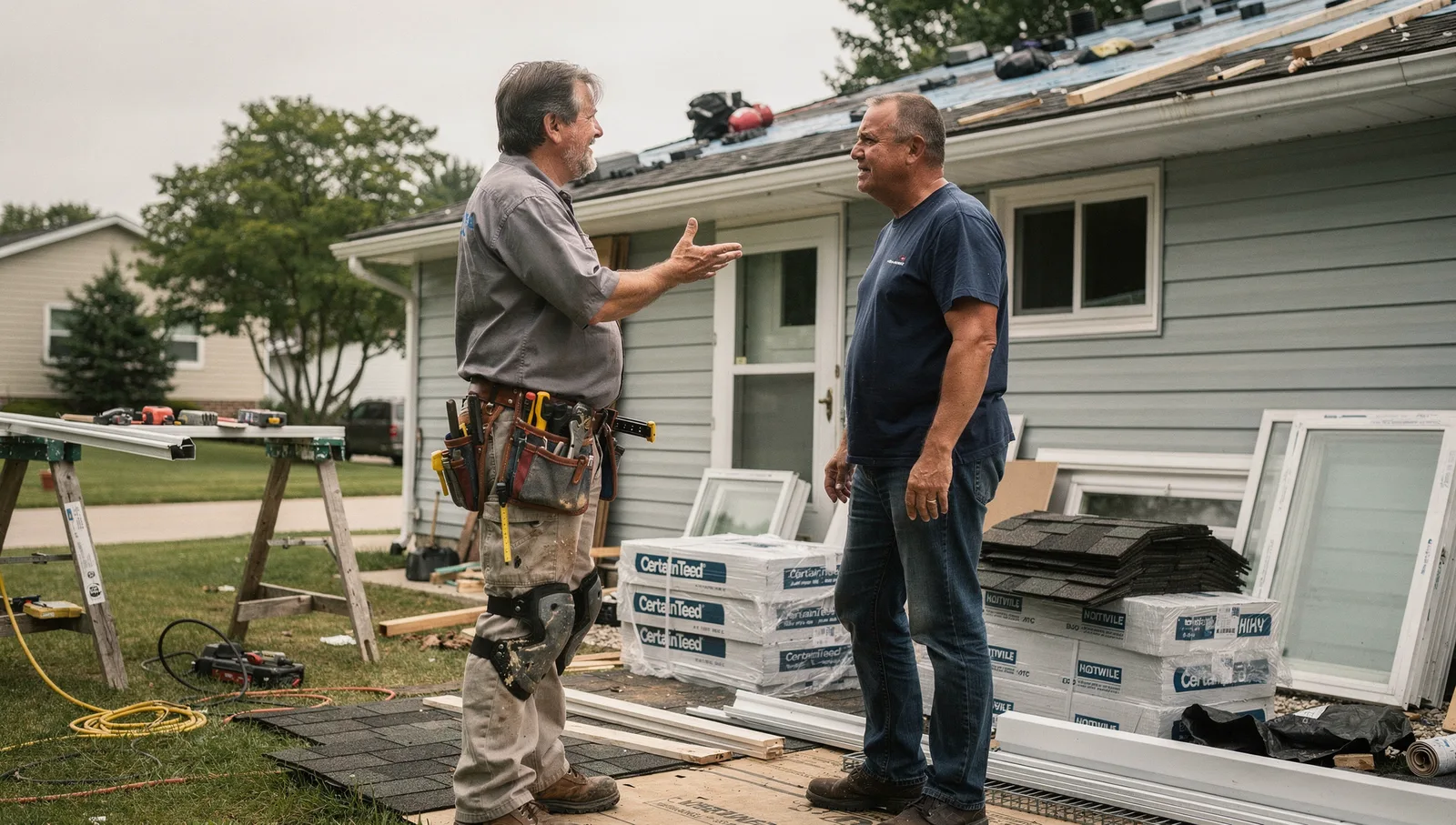
Comparing roof estimates simply by raw material cost obscures the true budget. An asphalt roof acts like an installment plan with recurring tear-off and replacement cycles, whereas metal represents an upfront infrastructure investment. Choosing between them comes down to balancing immediate cash outlay against whole-building performance over several decades.
Initial Installed Costs: Metal Roofing vs. Asphalt Shingles#
Architectural asphalt shingles provide an accessible entry point for residential reroofing, while metal roofing requires significantly higher upfront capital. In 2026, architectural asphalt shingles cost between $4.50 and $8.50 (roofvista.com) per square foot installed, according to RoofVista. By contrast, standing seam metal systems range from $9.50 to $16.00 per square foot installed.
Looking across broader industry estimates, Fry Design Co notes from 2025 HomeGuide data that asphalt shingles cost $300 to $500 (frydesignco.com) per square installed (or $6,000 to $10,000 for a 20-square home). On the other hand, metal roofing costs $500 to $1,600 per square installed, or $10,000 to $32,000 for 20 squares. At the high end of premium installations and intricate architectures, This Old House highlights that asphalt averages around $7 (thisoldhouse.com) per square foot ($14,000 for a 2,000-square-foot roof), while metal roofing can average up to $28 per square foot ($56,000 for 2,000 square feet).
| Roofing Material | Cost per Square Foot Installed (roofvista.com) | Cost per Square Installed (frydesignco.com) | Total Cost for 2,000 sq ft Roof (frydesignco.com) |
|---|---|---|---|
| Architectural Asphalt Shingles | $4.50 to $8.50 | $300 to $500 | $6,000 to $10,000 |
| Standing Seam Metal Panels | $9.50 to $16.00 | $500 to $1,600 | $10,000 to $32,000 |
- Determine roof pitch & squares
- Compare material price per sq ft
- Calculate tear-off & prep fees
- Factor long-term life cycle savings
Roof Tear-Off and Deck Repair Costs for Metal or Shingle Replacement#
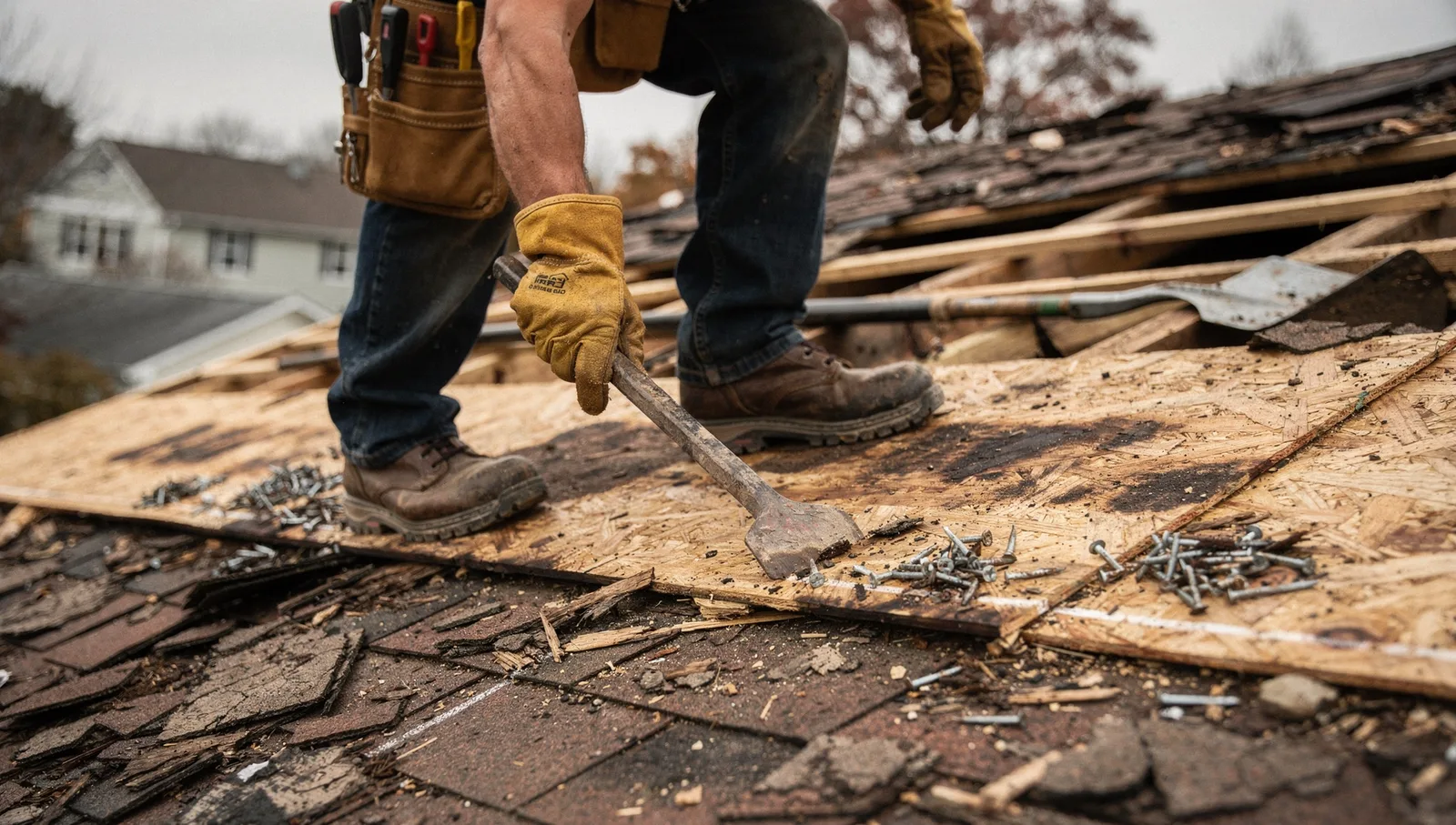
Stripping an existing roof down to the wood deck adds a distinct labor expense that many property owners overlook. Removing and disposing of old roofing materials costs between $0.40 and $2.00 (roofingcalculator.com) per square foot, totaling $665 to $3,343 across an entire project, as reported by Roofing Calculator. When broken down by layers on a 2,000-square-foot roof, stripping one layer of shingles runs $1,000 to $2,500, while removing two layers climbs to $2,000 to $4,500. In Middle Tennessee, Quality Exteriors reports that a complete tear-off before placing metal adds $1,000 to $5,000 to the panel bill (qualityexteriors.com).
Once old shingles come off, hidden rot or sagging wood may surface. Repairing or replacing damaged roof decking costs $2.20 to $3.00 (roofingcalculator.com) per square foot, according to Roofing Calculator.
Some homeowners consider an overlay, installing metal directly over existing shingles. Quality Exteriors finds that an overlay ranges from $5.50 to $15 (qualityexteriors.com) per square foot, reducing labor demands and bypassing the $1,000 to $5,000 tear-off cost, though it carries the risk of voiding certain manufacturer warranties. An overlay also blinds you to moisture damage lurking in the underlying plywood.
Long-Term Cost of Ownership and Operating Expenses#
The real financial return of a roofing assembly unfolds over decades of operation. Standing seam metal roofs offer an expected lifespan of 40 to 70 years, according to RoofVista (roofvista.com), or 30 to 80 or more years per Fry Design Co (frydesignco.com). Meanwhile, architectural asphalt shingles carry an anticipated service life of 15 to 30 years or 20 to 30 years. Because asphalt requires regular replacement cycles, the financial gap closes over time.
Operational savings also lower the carrying cost of metal. RoofVista reports that reflective metal surfaces deliver 10% to 25% (roofvista.com) cooling energy savings by reflecting solar heat away from the attic. Furthermore, homeowners installing metal roofing can secure insurance premium reductions of 5% to 35% ($200 to $800 (roofvista.com) annually), which RoofVista estimates can accumulate to between $8,000 and $56,000 across a 40- to 70-year service life. Accounting for avoided reroofing projects, maintenance differences, energy efficiency, and insurance discounts, RoofVista calculates that a metal roof typically costs $5,000 to $12,000 less than asphalt shingles over 25 years.
Once recurring leaks or persistent moisture start showing up in your attic space, that is the point to bring in roofing help to evaluate your exterior building envelope.
Resale Value and Cost Recovery#
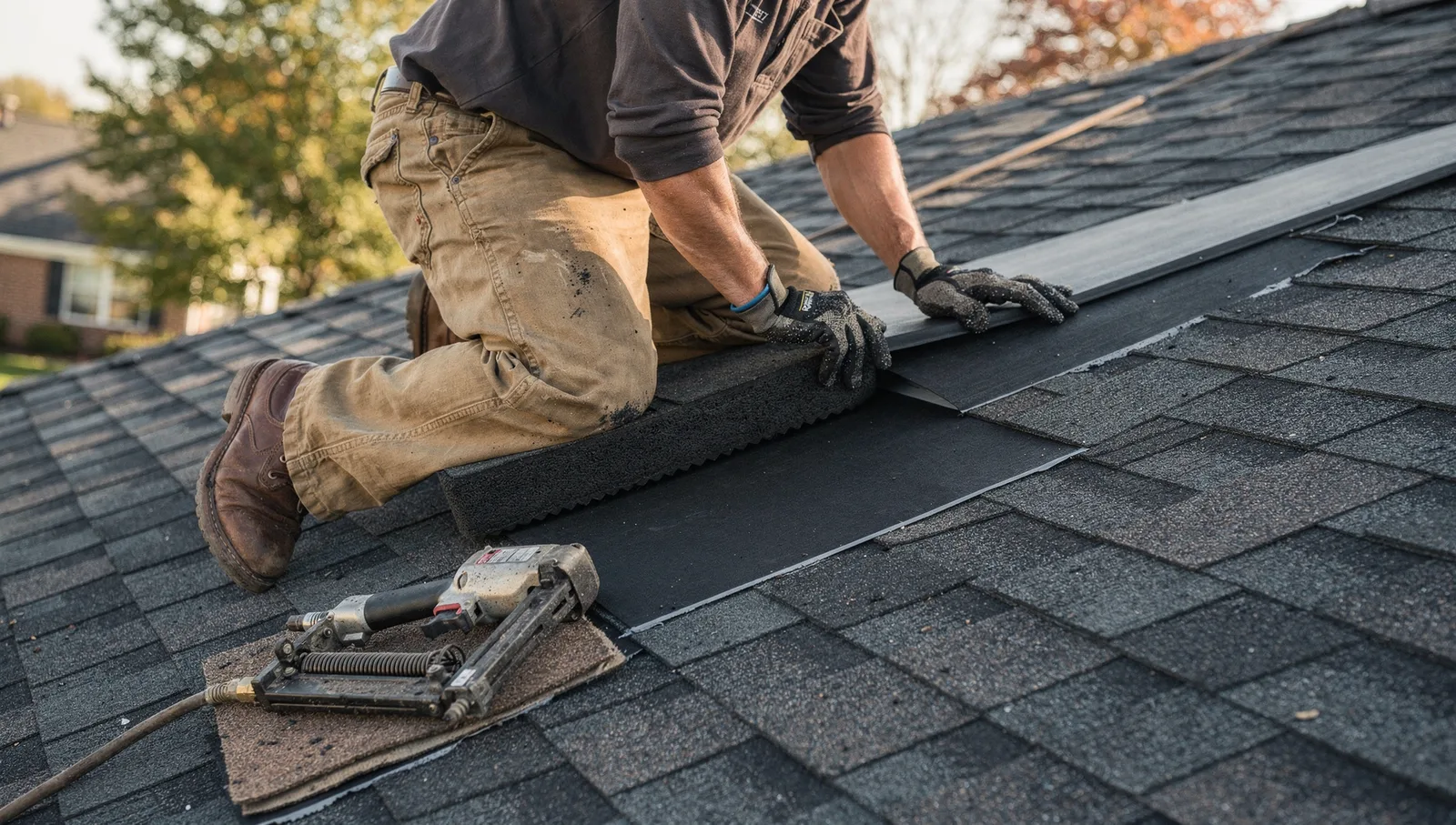
While metal roofing lowers ownership costs over decades, short-term resale recovery tells a different story. If you plan to sell your property within a few years, asphalt shingles recoup a portion of their initial price tag.
According to the Remodeling Cost vs. Value Report cited by Opendoor in 2026, a metal roof returns approximately 48% to 60% (opendoor.com) of its initial cost at immediate resale. The same report notes this return is lower than asphalt shingle replacement. Shingles remain familiar to standard home buyers, whereas the substantial capital invested in standing seam panels primarily benefits the resident who stays long enough to realize its durability.
Roof Ventilation and Insulation Rules Under Metal or Asphalt#
Roof assemblies do not perform in a vacuum; they interact directly with heat and moisture escaping the living quarters below. Thermal bridging is heat moving through the wood framing into the home by conduction (energy.gov), so insulation detailing matters under either roof type.
To manage heat loss and snow loads, assembly requirements change:
- For roofs where the ground snow load is less than 50 lb/ft², the U.S. Department of Energy specifies covering the roof sheathing with a fully adhered air barrier membrane and two layers of rigid insulation (staggered seams up to R-50 or greater) without a vented space under the cladding (energy.gov).
- For roof systems exposed to ground snow loads greater than 50 lb/ft², a continuous ventilation space must be provided under the roof cladding to compensate for the insulation value of the snow layer.
- To keep moisture-laden air from entering the attic, rigid insulation joints must be taped or sealed and edges air-sealed, while maintaining a minimum 2-inch space at the insulation wind baffle.
Using these continuous detailing rules prevents condensation from collecting against cold metal pans or rotting asphalt underlayment.
Roofing Workmanship Warranty vs Manufacturer Warranty#
A manufacturer warranty covers defects in the roofing products themselves, while a workmanship warranty covers leaks caused by installation errors such as faulty nail placement or incorrect underlayment (nrcia.org). You need both.
Warranty fine print requires active homeowner stewardship:
- Maintain scheduled maintenance visits. NRCIA reports that many roofing warranties mandate routine inspections at set intervals to keep coverage valid (nrcia.org).
- Avoid unauthorized modifications. NRCIA notes that adding solar panels, skylights, or satellite dishes without contractor approval can void your workmanship coverage.
- Document all exterior work. Keeping records of authorized contractor checkups ensures that leak repairs resulting from poor craft remain fully covered by the installer.
How to Compare Metal Roofing and Asphalt Shingle Quotes#
Comparing contractor estimates requires looking past the bottom line and analyzing line-item specifications. A bid that appears thousands of dollars cheaper often excludes essential code upgrades, proper venting, or tear-off fees.
Before signing a roofing contract, review this evaluation checklist:
- Verify whether local building permits ($150 to $500 (superarbor.io)) and municipality inspection fees are explicitly itemized (qualityexteriors.com).
- Confirm that synthetic underlayment or self-adhering leak barriers are specified by product name rather than listed as generic paper (nrcia.org).
- Check whether the bid provides a per-layer tear-off price, protecting you from sudden surcharges if a second layer of shingles is found (theroofingbrief.com).
- Secure a fixed per-square-foot allowance for wood deck repairs to handle soft plywood.
- Confirm that the contractor carries certified manufacturer installer credentials, such as CertainTeed Integrity Roof System standards, to ensure proper workmanship backing.
If you own a home in Northville, Plymouth, or Livonia and are weighing the costs of a metal roof versus architectural shingles, scheduling a comprehensive exterior evaluation is your best next step to inspect your deck framing, attic airflow, and long-term budget.
| Metric | Architectural Asphalt Shingles | Standing Seam Metal Panels |
|---|---|---|
| Installed Cost (2,000 sq ft) | $9,000 to $17,000 | $19,000 to $32,000 |
| Expected Lifespan | 15 to 30 years | 40 to 70+ years |
| Immediate Resale Recoup / ROI | ~68% | ~48% to 60% |
| Cooling Energy Savings | Minimal / absorbs heat | 10% to 25% savings |
| Annual Insurance Premium Discount | None reported | 5% to 35% ($200 to $800/yr) |
| 25-Year Total Cost Difference | Baseline cost | $5,000 to $12,000 less overall |
| Project Scope Item | Unit Pricing | Total Range (2,000 sq ft Roof) |
|---|---|---|
| Roofing Material Tear-Off & Disposal | $0.40 to $2.00 / sq ft | $665 to $3,343 |
| Decking Replacement or Repair | $2.00 to $5.00 / sq ft | Variable by damage area |
| Building Permits & Fees | Flat fee | $150 to $500 |
| Metric | Figure | Source |
|---|---|---|
| For roofs where the ground snow load is less than 50 lb/ft2, roof sheathing is… | where the ground snow load is less… | energy.gov |
| For roofs with ground snow loads greater than 50 lb/ft2, a ventilation space… | With ground snow loads greater than… | energy.gov |
| To prevent moisture-laden air entering an attic, joints of rigid insulation… | 2 in. minimum space | energy.gov |
| Thermal bridging is heat moving through the wood framing into the home by… | heat moving through the wood framing… | energy.gov |
| A roofing workmanship warranty covers installation errors and leaks caused by… | covers errors in how the roof was put on | www.nrcia.org |
| Roofing workmanship warranties generally cover both labor and materials needed… | cost of labor and materials to fix… | www.nrcia.org |
| Many roofing warranties mandate routine roof inspections, often every one or… | inspected periodically, often every… | www.nrcia.org |
| Making unauthorized modifications to a roof, such as adding solar panels… | Making unauthorized alterations can… | www.nrcia.org |
Metal vs. Asphalt Cost & Lifecycle Calculator
Compares the initial installation cost and annualized lifecycle cost of architectural asphalt shingles versus standing seam metal roofing based on roof square footage, unit costs, and estimated lifespans.
Asphalt Initial Cost:
Metal Initial Cost:
Upfront Cost Difference:
Asphalt Annualized Cost:
Metal Annualized Cost:
Frequently Asked Questions
What is the price difference between asphalt shingles and a metal roof?
Standing seam metal costs $9.50 to $16.00 per square foot installed, while architectural asphalt shingles run $4.50 to $8.50 per square foot, per RoofVista. On a 2,000-square-foot roof, HomeGuide data puts metal at roughly $10,000 to $32,000 versus $6,000 to $10,000 for asphalt.
How long do metal roofs last?
Standing seam metal roofs last 40 to 70 years according to RoofVista, or 30 to 80 or more years according to HomeGuide data, outlasting standard asphalt shingles.
Does homeowners insurance go down with a metal roof?
Yes. Metal roofs qualify for insurance premium discounts of 5% to 35%, saving homeowners $200 to $800 annually, which can accumulate to between $8,000 and $56,000 across a 40- to 70-year lifespan.
How much more expensive is metal roofing than shingles?
Metal roofing costs more upfront than asphalt shingles. Per square, metal runs $500 to $1,600 installed compared to $300 to $500 for asphalt shingles.
Disclaimer
This content is general information about roofing and home-exterior work and is not a substitute for an on-site inspection. Contact Horizon Roofing & Construction for advice specific to your home.
Sources
- [PDF] Volume 12. Energy Renovations-Insulation: A Guide for Contractors ... - energy.gov
- Shingles vs. Metal Roof Cost (2026 Guide) - thisoldhouse.com
- Does a New Roof Increase Home Value? ROI, Costs, and What Sellers Need to Know | Opendoor - opendoor.com (2026-03-18)
- Metal Roof vs. Shingles Cost: A Full Comparison for 2026 – Super Arbor - superarbor.io
- 5-Year Workmanship Warranty Roofing: What's Covered? - nrcia.org
- Frydesignco - frydesignco.com (2026-09-01)
- Roof Replacement Cost by Location, Roof Type & Material - roofingcalculator.com
- Can You Put a Metal Roof over Shingles? 2026 Guide. - qualityexteriors.com
- Metal Roof vs Shingles: Cost, Lifespan & ROI (2026) - roofvista.com (2026-01-25)
- Metal Roof Insurance Discounts: How Much Can You Save? | RoofVista - roofvista.com
- Cost to Redo a Roof in 2026: Tear-Off vs. Overlay | TRB - theroofingbrief.com